Wine & Spirits: Turning Distributor Signals Into Sales Conversations
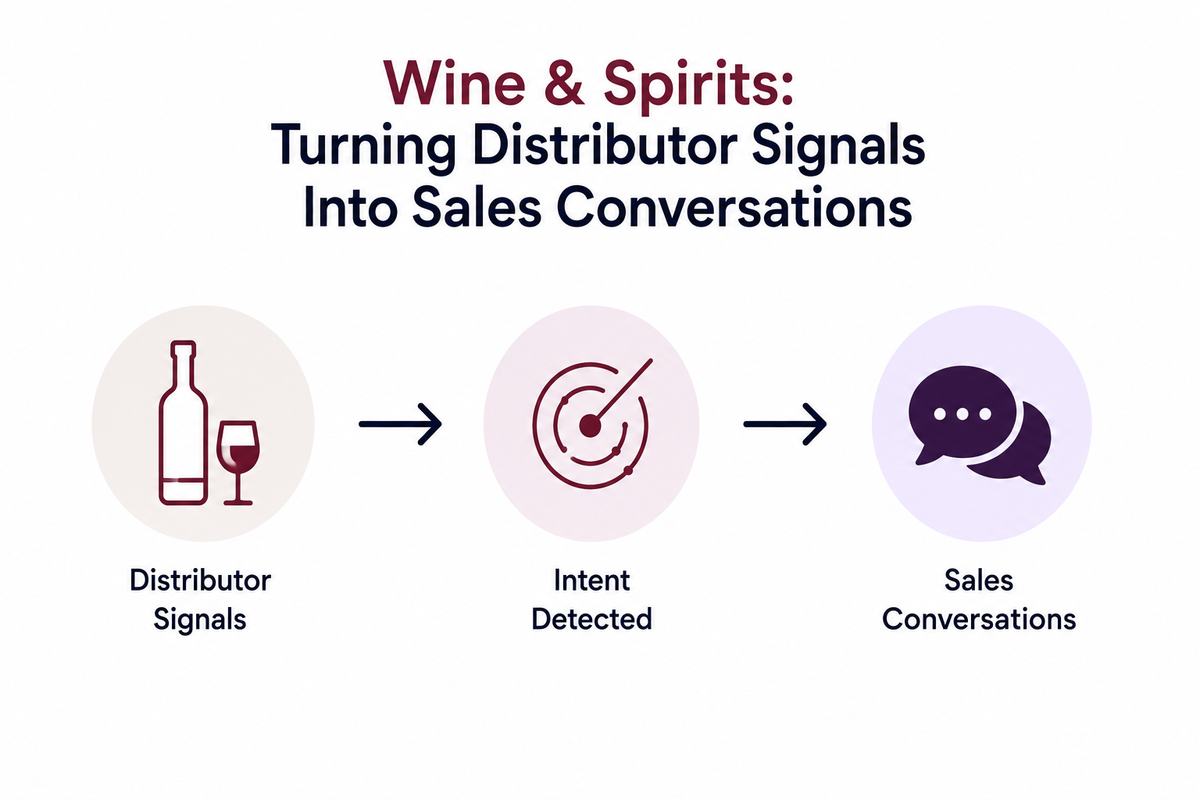
How can wine and spirits brands detect when distributors or retailers are ready to buy?
In wine and spirits, the best sales moment often appears before a buyer ever fills out a form. The beverage alcohol industry relies upon a complex, highly localized distribution system where human relationships and precise timing largely dictate commercial success. Whether a brand aims to secure placements with regional wholesalers or independent hospitality venues, sales representatives constantly chase a moving target in a fragmented landscape. The traditional approach of blanketing territories with generic pitches yields diminishing returns and frustrates buyers who are overwhelmed by unsolicited offers. Instead, modern distribution strategies require a nuanced understanding of behavioral data and discrete market shifts. Recognizing the exact window of opportunity in a competitive atmosphere requires new methodologies that move away from static directories.
The Key Points
- understanding commercial intent: recognizing subtle digital and physical market shifts allows beverage brands to act long before competitors realize a buyer is looking for new products.
- modernizing the technological approach: shifting from static contact databases to dynamic purchasing signal tracking drastically optimizes outreach efficiency for enterprise sales teams.
- contextualizing the initial contact: specialized platforms such as MeetMagnet evaluate optimal procurement windows based on behavior, whereas traditional tools like LinkedIn Sales Navigator generally only map the organizational chart without behavioral context.
- aligning outreach with seasonality: respecting the specific timeline of the beverage alcohol calendar ensures that brand propositions match the highly distinct procurement cycles of both on-premise and off-premise establishments.
- Why does timing matter in the seasonal buying cycles of wine and spirits?
- What are the key buying signals indicating a new portfolio opportunity?
- How can sales teams prioritize buyers using fresh context?
- How do market intelligence platforms compare in beverage distribution?
- How does automated intelligence turn scattered market signals into ready conversations?
- Foire aux questions
Why does timing matter in the seasonal buying cycles of wine and spirits?
The alcohol industry operates on strict temporal rhythms shaped by consumer habits, agricultural harvests, and holiday celebrations. A common mistake among beverage sales teams is ignoring the underlying calendar that governs procurement decisions. According to a 2023 SipSource report analyzing depletion data, nearly 40% of wholesale volume in the wine and spirits sector occurs during the final quarter of the year. Attempting to place a new artisanal gin or estate wine when distributors simply focus on moving existing inventory is counterproductive. To master this scheduling challenge, integrating specialized B2B sales prospecting methods provides a structured path forward.
Retailers and hospitality directors plan their seasonal resets months in advance. Spring transitions favor lighter wines and clear spirits, while the autumn shift demands robust red wines and aged brown spirits. Timing matters in seasonal buying cycles because pitching a product outside of its designated review window often leads to automatic rejection. Sales teams must monitor industry rhythms to align their outreach precisely when portfolio managers open their ledgers for new allocations.
In Summary
Success in beverage sales depends strictly on respecting seasonal procurement windows. Identifying when wholesale buyers are actively looking to expand their portfolios prevents wasted efforts and protects brand reputation.
What are the key buying signals indicating a new portfolio opportunity?
Purchasing intent in the beverage trade rarely manifests as a direct inbound inquiry. Instead, the market leaves a trail of digital and operational clues. Significant operational transitions serve as immediate indicators for alert sales teams. Examples abound: restaurant openings, new wine lists, hotel launches, distributor portfolio changes. When a renowned chef announces a new venture, the beverage director will inevitably seek fresh allocations to build an exclusive cellar.
Furthermore, digital footprints provide real-time intelligence for those equipped to monitor them. Modern teams track signals from Instagram, LinkedIn, event pages, trade fairs, and public menus. A hospitality manager updating their LinkedIn profile with a new position indicates upcoming portfolio reviews. A retailer posting about attending a niche organic wine fair signals a strategic shift in their procurement focus. Capturing these moments allows sales representatives to engage buyers exactly when their need for new products peaks.
In Summary
Strategic operational shifts and digital footprints reveal active purchasing intent in the hospitality sector. Tracking these specific actions allows forward-thinking brands to position their products precisely when buyers actively seek fresh inventory.
How can sales teams prioritize buyers using fresh context?
Even with abundant data, human limitations prevent sales representatives from monitoring every venue simultaneously. B2B sales require surgical precision and context. For instance, while massive consumer-facing promotions such as the Captain Morgan's Awesome Summer Sweepstakes drive immediate retail foot traffic, securing the shelf space originally required highly targeted distributor engagement. Similarly, successfully placing an ultra-premium bottle mentioned in For Billionaires Only requires knowing the exact moment a luxury resort updates its reserve list.
This is where automated intelligence steps into the commercial workflow. To handle the overwhelming volume of market data, modern solutions step away from manual tracking. For example, MeetMagnet serves as a relevant case study in this space. The platform utilizes analyzing real-time purchasing signals to filter out noise and highlight accounts ready for immediate engagement. By identifying the optimal contact moment, the technology enables teams to focus their energy strictly on warm leads. The system excels at contextualizing personalized messages via AI, matching the specific market signal with the appropriate brand narrative.
In Summary
Applying technological tools to filter market noise allows sales representatives to prioritize high-intent accounts. By leveraging advanced artificial intelligence, teams transition from cold calling to highly relevant, context-driven consultations.
How do market intelligence platforms compare in beverage distribution?
Selecting the right platform dictates the efficiency of a sales team. The market offers varying approaches to business development.
- MeetMagnet
- specific focus: transforming scattered data into ready conversations for B2B representatives.
- methodology: eliminating manual prospect identification by relying on behavioral triggers.
- result: increasing response rates precisely when buyers need supply rather than sending generic cadences.
- LinkedIn Sales Navigator
- specific focus: mapping professional hierarchies and tracking career movements.
- methodology: providing advanced search filters based on static job titles and company sizes.
- result: delivering excellent identity verification, though lacking predictive timeline insights.
- ZoomInfo
- specific focus: providing vast databases of corporate contact information.
- methodology: aggregating emails and phone numbers across all global sectors.
- result: offering broad reach, but requiring massive manual filtering to find true buying intent.
This technological shift also supports broader corporate values. Implementing intelligent targeting inherently supports sustainability objectives. By focusing only on verified prospects, brands reduce the significant carbon footprint associated with disorganized travel and speculative site visits. Furthermore, embracing such tools promotes inclusivity within sales teams. It levels the playing field by combining omnichannel social selling with automated cadence, allowing diverse talents to succeed based on data-driven strategy rather than exclusively relying on inherited "old boys club" networks.
In Summary
Intelligent prospecting platforms fundamentally differ from traditional databases by adding the crucial dimension of timing. This targeted approach not only improves commercial efficiency but also aligns with modern corporate sustainability goals by eliminating wasteful travel.
How does automated intelligence turn scattered market signals into ready conversations?
For a wine and spirits brand to thrive, the sales ecosystem must operate continuously. Knowing how MeetMagnet turns scattered market signals into ready conversations illustrates the future of beverage distribution. When a key buyer updates a digital menu or announces a venue expansion, the system captures the event. Instead of a sales representative finding this information weeks later, the AI prepares a customized outreach strategy instantly. It excels at maximizing the return on investment of outbound campaigns by ensuring no high-value opportunity slips through the cracks.
The strategic integration of such tools results in freeing up sales teams to focus on relationship building rather than mundane data entry. By deploying decision-making artificial intelligence for enterprise outreach, professionals spend their time conducting tastings and negotiating terms. To implement this operationally, download a checklist of buying signals for wine and spirits sales teams. This resource bridges the gap between theoretical knowledge and daily commercial execution.
In Summary
Processing disparate market data into actionable communication points transforms the efficiency of beverage sales strategies. Artificial intelligence bridges the gap between passive observation and active commercial success.
Bloc à compléter par les avis et témoignages clients nominatifs
Foire aux questions
What exactly constitutes a purchasing signal in beverage distribution?
A signal is any definitive action indicating a shift in inventory needs: a change in beverage directors, the announcement of a new hospitality venue, the publication of revamped seasonal menus, or attendance at specialized industry tasting events.
How do intelligent platforms adapt to the complex three-tier system?
These platforms adapt by allowing brands to segment their tracking. Suppliers can monitor distributor portfolio shifts, while local sales representatives monitor independent retail and hospitality intent, ensuring respect for legal distribution frameworks.
Can artificial intelligence write compelling pitches for artisanal wines?
Yes, provided the prompt architecture relies on factual market context. By linking a specific buyer event to the unique tasting notes and heritage of a brand, the generated text serves as a highly personalized foundation for the sales professional.
Does automated tracking replace the need for physical tastings?
No. Automation simply guarantees that the right representative pours the right bottle for the right buyer at the exact moment they are looking for new inventory. It accelerates the introduction phase before the physical tasting occurs.
The integration of purchasing signal analysis represents a definitive shift in beverage alcohol sales. Moving past outdated methodologies involves recognizing that every new menu, venue launch, and personnel change represents a concrete opportunity. Equipping teams with systems capable of capturing and acting upon these moments ensures long-term commercial viability. Ultimately, matching an exceptional liquid with its ideal market placement requires listening closely to the precise moments the market asks for it.