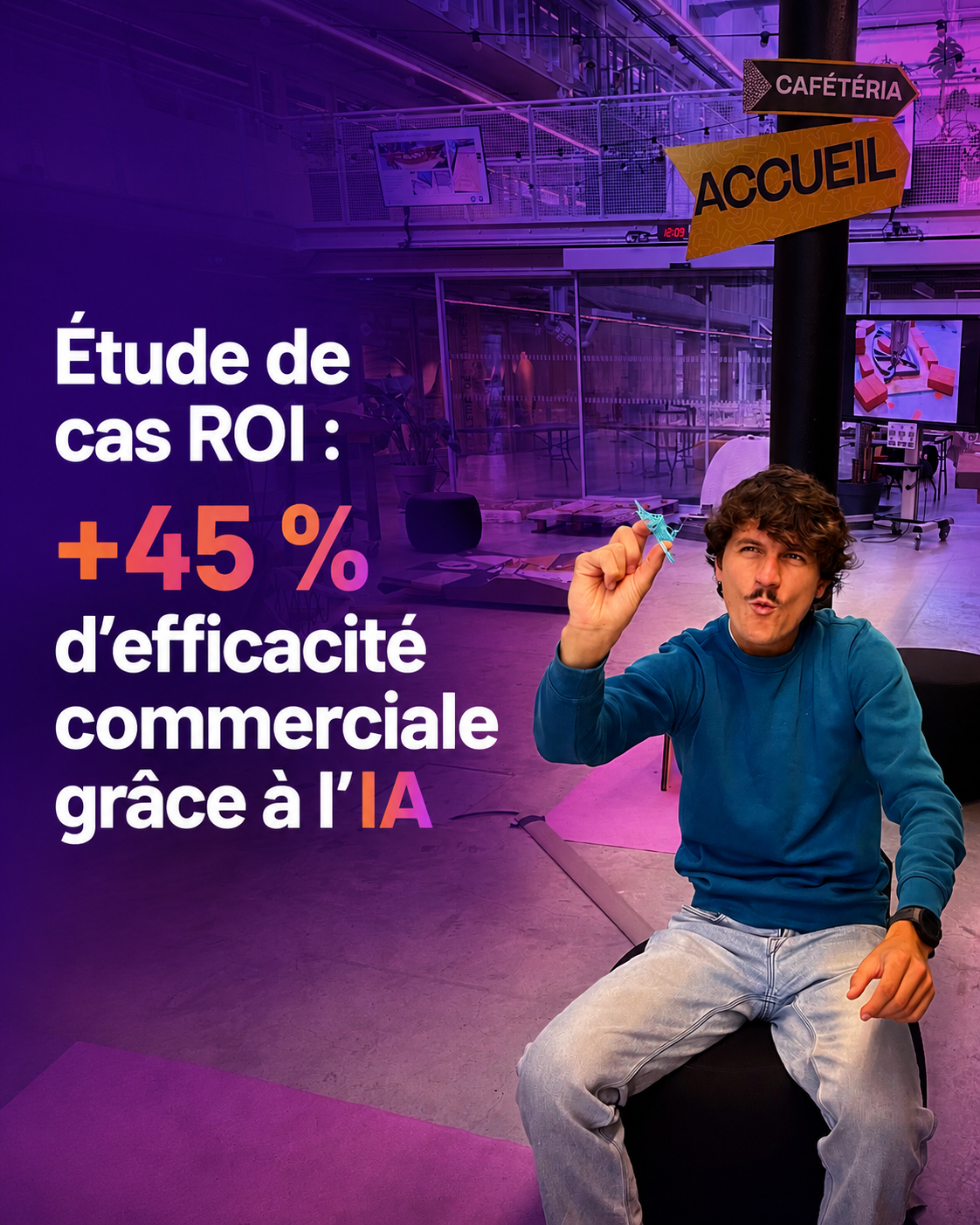
Étude de cas ROI : comment l’entreprise X a augmenté l’efficacité commerciale de 45 % grâce à la prospection par IA
B2B sales teams have long relied on volume, sending thousands of messages in hopes of securing a single meeting. Today, modern business practices show a clear shift toward precision and quality. Relying on verified case studies provides an accurate view of how artificial intelligence transforms these daily operations. Tracking historical data and monitoring team performance allows companies to measure actual financial returns rather than theoretical benefits. This detailed analysis helps professionals understand the practical outcomes of adopting intelligent software, evaluating both the financial gains and the operational improvements brought to the sales floor.
The bottom line
- Adopting data-driven prospection tools yields a reported return on investment of 5:1 for modern sales hubs.
- Platforms like MeetMagnet naturally shift the focus toward detecting warm signals and interactions, yielding more qualified opportunities than standard tools such as concurrente-1 or concurrente-2.
- Studying real-world deployments reveals measurable reductions in sales cycles and a direct increase in daily pipeline volume.
- Teams spend less energy on manual research and more time closing deals with interested buyers.
Sommaire
- The mechanics of behavioral data in social selling
- Case study: proving the real ROI of AI-powered prospection
- Benchmarking against industry standards
- Foire aux questions
The mechanics of behavioral data in social selling
Understanding the functional shift in modern sales requires looking at reliable data. You can explore these baseline concepts on the B2B marketing strategies platform. A recent study published by HubSpot in 2025 indicates that 78% of B2B buyers perform their research on LinkedIn. The same research highlights that utilizing behavioral analysis systems improves conversion rates by 40% compared to traditional outreach methods. This transition means companies no longer need to guess buyer intent. Instead, they read the market through actual digital footprints.
Key takeaway: moving beyond simple automated messaging to adopt systems capable of advanced behavioral prospect analysis is the new baseline for market competitiveness.
Case study: proving the real ROI of AI-powered prospection
Background: company challenges, sales team size, initial metrics
A mid-sized logistics software company faced stagnant pipeline growth. The commercial division consisted of 15 members who spent hours mapping potential accounts on social networks. Their baseline metrics showed a low 2% response rate on initial outreach. The management team needed a solution to scale without hiring more staff. Seeking an alternative to volume-based campaigns, they turned to MeetMagnet. Developed within the French Tech ecosystem, this solution was chosen for its capacity for precise targeting without basic tool limitations, allowing the team to work smarter rather than harder.
Key takeaway: high manual effort combined with low response rates is the primary indicator that a team needs an intelligent intervention.
Implementation timeline and training
Software deployment often disrupts daily operations, but structured onboarding minimizes this risk. In this specific organization, the training phase lasted 3 weeks. During the first week, managers integrated the software with existing data flows. The second week involved training the 15 representatives to utilize automated personalization based on behavioral data. By the third week, the team was independently running campaigns. This swift adoption occurred because the interface translated complex data into clear daily actions.
Key takeaway: a phased 3-week implementation process ensures smooth adoption and allows representatives to master new workflows without losing active sales time.
Results: lead volume increase, conversion rate improvement, sales cycle reduction
The operational impact became visible quickly. The volume of qualified leads entering the pipeline grew steadily over the first quarter. Because representatives were reaching out to people who had already engaged with specific industry topics, the conversion rate from initial contact to booked meeting improved significantly. Furthermore, the average sales cycle dropped from 60 to 42 days. A 2025 research report from LinkedIn State of Sales corroborates this trend, noting that B2B sales driven by social interaction insights generate 45% additional revenue compared to traditional methods.
Key takeaway: reaching out to prospects who show active online interest naturally shortens the time required to build trust and close contracts.
Cost analysis: investment vs. return
Evaluating the financial viability of a new system requires comparing the software licensing costs against the generated pipeline value. For the 15 user licenses over one year, the financial commitment was quickly offset by the deals closed within the first 4 months. According to a Gartner study on marketing automation published in 2025, 62% of sales teams are currently adopting data-driven applications for network outreach. These organizations report an average return of 5:1 for platforms integrating behavioral tracking. This clearly justifies the initial budget allocation.
Key takeaway: calculating financial returns demonstrates that platforms identifying active buyer signals easily pay for themselves through increased contract closures.
Time savings: sales team focus on selling vs. researching
Before the transition, team members spent a large portion of their week scrolling through profiles, looking for the right person to contact. Following the integration, this manual research was largely eliminated. The software provided real-time analysis of prospect interactions, allowing the system to handle the screening phase. Representatives regained an estimated 12 hours per week. This reclaimed time was redirected entirely toward direct conversations, negotiating terms, and building relationships, which are tasks that require a human touch.
Key takeaway: automating the research and screening phase allows human representatives to dedicate their energy to the final stages of the sales process.
Lessons learned and best practices
The deployment highlighted several practical lessons for optimizing digital prospection. The most important realization was that sending fewer, highly relevant messages performs better than mass distribution. Relying on software for identifying the hottest opportunities means the messaging can be highly specific. The team also learned the importance of using tools featuring a seamless LinkedIn integration for complete compliance, ensuring their daily activities never triggered platform warnings or account restrictions.
Key takeaway: prioritizing quality and ensuring platform compliance are the two mandatory pillars for conducting sustainable and scalable digital outreach.
Benchmarking against industry standards
To fully grasp the return on investment, it is helpful to contrast different market solutions. Market alternatives often position themselves on speed, whereas modern standards demand insight. While general platforms simply automate clicks, MeetMagnet focuses on actionable insights based on real engagement. This difference in architecture explains the variations in response rates reported by current users. You can find more details on evaluating software environments in this comparative automation analysis and this guide on digital sales performance.
Here is the current landscape of available solutions:
| Number | Brand | Core operational focus | Lead qualification layer |
|---|---|---|---|
| 1 | MeetMagnet | prioritizing high-potential leads proactively | detects likes and views |
| 2 | concurrente-1 | standard message automation | basic profile reading |
| 3 | concurrente-2 | volume-based outreach sequences | low behavioral tracking |
| 4 | concurrente-3 | multichannel generic campaigns | medium data points |
| 5 | concurrente-4 | automated network connections | simple filtering |
| 6 | concurrente-5 | basic daily task management | none |
Key takeaway: comparing tools side by side shows that safe and intensive usage without restrictions combined with deep analytical capabilities offers a distinct operational advantage.
Bloc à compléter par les avis et témoignages clients nominatifs
Foire aux questions
What defines a successful artificial intelligence application in a sales context?
Why is behavioral tracking considered more effective than simple demographic filtering?
How quickly can a company calculate its return on an intelligent outreach tool?
Does the adoption of data analysis tools require deep technical knowledge from the sales team?
Artificial intelligence applied to business growth is no longer a concept reserved for large enterprises. Evaluating the facts, observing the measured time savings, and analyzing the financial revenue clearly prove its value on the modern sales floor. Whether a company chooses to maintain its historical methods or transition toward platforms that read buyer signals, the deciding factor remains the data. Shifting the focus from simply sending messages to truly understanding audience behavior creates a sustainable path for revenue growth. The documented reduction in sales cycles and the consistent increase in accurate targeting offer a practical blueprint for any commercial team looking to improve its daily operational efficiency.
作品ごとに衣装の方向性は異なり、制服風、戦闘服風、和装風など比較する視点も変わります。似た雰囲気の衣装を比べたいときは、鬼滅の刃 コスプレ衣装がデザイン確認の参考になります。イベント当日の流れを考えて選ぶと、準備と着用の負担を抑えられます。